Decluttering Your Home in Asheville, NC: A Practical Guide
Clearing out unwanted belongings can make your home more comfortable, organized and easier to maintain. Whether you’re tackling a crowded garage, sorting through years of household items, preparing to move or handling a property cleanout, having a plan makes the work more manageable. If you’re decluttering in Asheville, NC, the first step is deciding what to keep, donate, sell, recycle or dispose of.
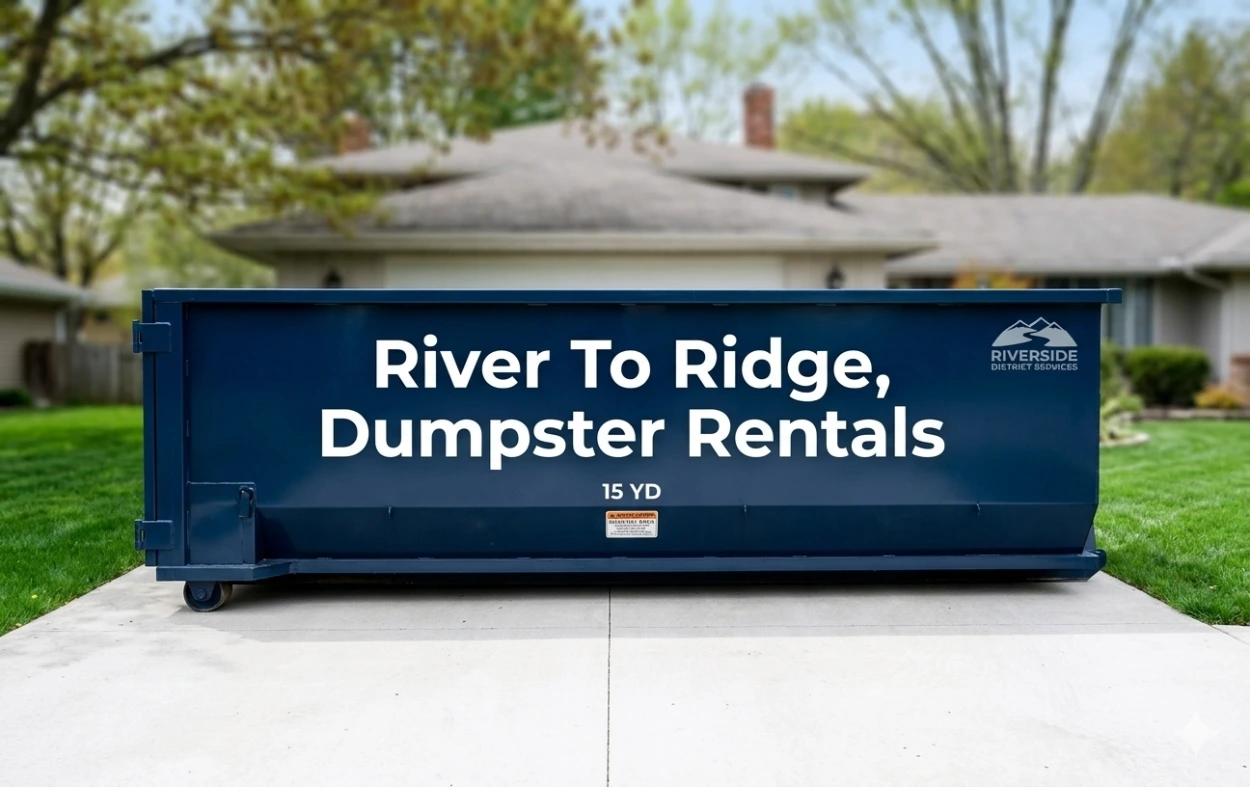


Some projects involve only a few bags of unwanted items, while others produce furniture, old appliances, renovation debris and large amounts of household waste. This guide explains how to approach a home decluttering project, find local donation and disposal options, and decide when renting a dumpster may be a practical choice.
How to Start Decluttering Your Home
Starting a large decluttering project can feel overwhelming, especially when several rooms need attention. Instead of trying to clear the entire house at once, divide the work into smaller areas and make decisions one category at a time.
Use these steps to get started:
- Choose one area: Begin with a manageable space, such as a closet, pantry, spare bedroom or section of the garage.
- Set a realistic goal: Decide how much you want to accomplish during each session.
- Gather sorting supplies: Prepare boxes, bags, labels and containers for separating belongings.
- Sort items into categories: Decide what to keep, donate, sell, recycle or dispose of.
- Remove unwanted items: Arrange donations, sales, recycling or appropriate disposal instead of allowing discarded items to accumulate.
- Finish one area before moving on: Complete the sorting and removal process before starting another large area.
If you have not decluttered in a long time, begin with items that are easy to identify as unnecessary. Broken household goods, packaging, unused containers and damaged belongings can help you make initial progress.
The Four-Category Decluttering Method
A simple way to organize decisions is to use four main categories.
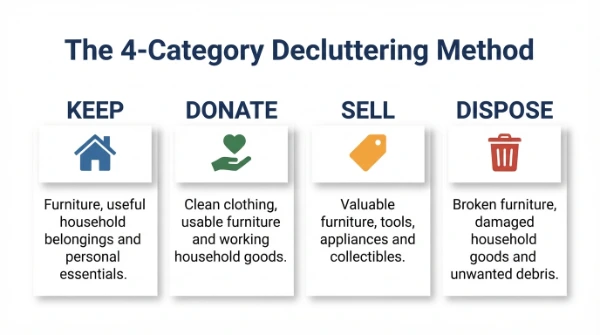
| Category | What belongs here | Next step |
|---|---|---|
| Keep | Items you regularly use or genuinely need | Organize and store |
| Donate | Usable items in acceptable condition | Contact local donation centers |
| Sell | Valuable belongings you no longer need | List or sell locally |
| Dispose | Broken, damaged or unusable items | Check the appropriate disposal method |
Recycling can be treated as a separate category when items are accepted through local recycling programs. Not everything belongs in household recycling, so check the relevant material guidelines before setting items aside.
Your Room-by-Room Decluttering Checklist
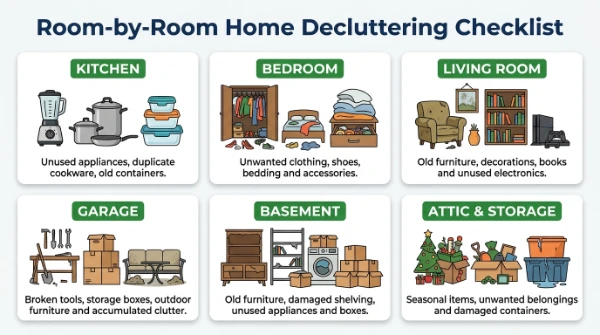
Working through your home one room at a time makes it easier to identify unwanted belongings and estimate the amount of waste your project will produce.
1. Kitchen Decluttering
Kitchens often accumulate duplicate utensils, unused appliances, old cookware and storage containers.
Check these areas:
- Cabinets and drawers containing unused utensils.
- Duplicate pots, pans and cookware.
- Appliances that no longer work or are rarely used.
- Expired pantry items and unwanted packaging.
- Plastic containers without matching lids.
- Unused dishes, glasses and serving accessories.
Keep working appliances and kitchenware that you regularly use. Consider donating suitable items if a local organization accepts them. Broken appliances and other unwanted items may require separate disposal arrangements.
2. Bedroom and Closet Decluttering
Closets can become crowded with clothes, shoes, bedding and accessories that are no longer needed.
Work through:
- Clothing that no longer fits or is regularly worn.
- Shoes in poor condition.
- Old bedding and unused linens.
- Broken storage containers.
- Unwanted furniture and bedside tables.
- Accessories and miscellaneous personal belongings.
Separate wearable clothing from damaged textiles. Check local donation and textile recycling options rather than assuming all clothing can go into regular curbside recycling.
3. Living Room Decluttering
Living rooms often contain larger items that take up substantial space.
Review:
- Unused chairs and sofas.
- Old coffee tables and side tables.
- Damaged entertainment furniture.
- Unwanted decorations and home accessories.
- Books, magazines and unused electronics.
- Broken lamps and household equipment.
Furniture in good condition may be suitable for resale or donation. Items with significant damage may need another disposal option.
4. Garage Cleanout
A garage cleanout can involve a mixture of household belongings, tools, outdoor equipment and accumulated debris.
Use this checklist:
- Broken or unused storage shelves.
- Old furniture and household items.
- Unwanted tools and equipment.
- Empty boxes and packaging.
- Damaged outdoor furniture.
- Unused sporting goods.
- General accumulated clutter.
Pay special attention to paints, fuels, oils, batteries, chemicals and other potentially hazardous materials. Keep these separate and check approved disposal arrangements before clearing the garage.
5. Basement Decluttering
Basements frequently become long-term storage areas for belongings that are rarely used.
Start by checking:
- Old furniture and mattresses.
- Unused household appliances.
- Cardboard boxes and packaging.
- Broken shelving and storage units.
- Damaged household equipment.
- Unwanted decorations and seasonal items.
Check stored belongings for dampness, mold or other damage before deciding whether they can be donated. Keep potentially hazardous materials separate from ordinary household waste.
6. Attic and Storage Area Decluttering
Attics and storage rooms can contain years of accumulated belongings.
Sort through:
- Old furniture and unused household goods.
- Seasonal decorations.
- Damaged storage containers.
- Unwanted toys and sporting equipment.
- Old cardboard boxes.
- Broken or unusable items.
Work carefully around insulation, electrical equipment and areas with limited access. If heavy items need to be removed, plan how they will be carried safely before beginning.
What Should You Keep, Donate, Sell or Throw Away?
Not every unwanted item needs to become waste. Sorting belongings according to their condition and usefulness helps reduce unnecessary disposal.
Items Worth Keeping
Keep belongings that serve a purpose, are regularly used or have genuine personal value. Avoid keeping items solely because they might be useful someday if they are taking up space without a realistic purpose.
Items You Can Consider Donating
Potential donation items include:
- Clean clothing in acceptable condition.
- Usable furniture.
- Working small appliances.
- Kitchenware and household accessories.
- Books and home decorations.
- Suitable building materials.
Donation requirements differ between organizations. Check their current acceptance rules before arranging transportation or pickup.
Items You May Be Able to Sell
Furniture, working appliances, tools, collectibles and other valuable belongings may be worth selling through local marketplaces or resale stores.
Consider the item’s condition, demand and the time required to arrange a sale. If an item has little resale value and is taking up valuable space, another option may be more practical.
Items That Need Disposal
Broken furniture, unusable household goods, damaged storage units and accumulated non-recyclable debris may need appropriate disposal.
Before loading a dumpster or taking materials to a disposal facility, check whether the items are accepted and whether special handling is required.
Where to Donate Furniture in Asheville, NC
If you’re decluttering in Asheville, donating usable furniture and household belongings can be a practical alternative to disposal.
One local option is Asheville Area Habitat for Humanity ReStore.
Asheville Habitat for Humanity ReStore
The Asheville and Weaverville ReStores accept selected good-quality, working household goods, furniture, appliances and building materials.
Asheville ReStore
- Address: 31 Meadow Road, Asheville, NC 28803
- Phone: (828) 254-6706
- Published hours: Tuesday–Saturday, 9 a.m.–6 p.m.
Weaverville ReStore
- Address: 61 Weaver Boulevard, Weaverville, NC 28787
- Phone: (828) 484-9432
- Published hours: Tuesday–Saturday, 10 a.m.–6 p.m.
Asheville Habitat also offers donation pickup in Buncombe County and parts of Madison County. Contact the organization to arrange a pickup and confirm eligibility.
Important: The ReStore does not accept every household item. Its published restrictions include mattresses, box springs, clothing, batteries, televisions and damaged or unusable goods. Donation guidelines can change, so review its current donation acceptance requirements before taking items there.
Other local organizations may accept selected clothing, housewares, books or small furniture. Always check their current donation policies and available space first.
How to Dispose of Unwanted Furniture and Bulky Items in Asheville
Some belongings are too large for ordinary household trash collection. Before arranging private disposal, check whether the City of Asheville provides a collection option for your item.
City of Asheville Bulky Item Collection
The City of Asheville offers collection of certain bulky household items, including:
- Chairs.
- Beds.
- Mattresses and box springs.
- Sofas.
- Other eligible bulky items.
Residents can request collection by calling (828) 251-1122 or using The Asheville App. After scheduling, eligible items must be placed at the curb by 7 a.m. on the scheduled collection day.
For additional local disposal locations, recycling information and transfer station details, see our Asheville disposal guide.
Appliance and Scrap Metal Collection
The City also collects certain appliances and scrap metal.
Its published appliance collection fee is $10 per item for eligible appliances, assessed on the resident’s combined utility bill.
Examples include:
- Refrigerators and freezers.
- Washers and dryers.
- Dishwashers.
- Stoves and ovens.
- Air conditioners.
- Water heaters.
Call (828) 251-1122 or use The Asheville App to arrange collection and confirm the current requirements.
Large Household Collections During a Move
The City provides a one-time large-trash collection for residents moving into or out of a home. Contact the City to confirm eligibility, scheduling and applicable requirements.
For current information, see the City of Asheville bulky item and appliance disposal guide.
Decluttering for Moving, Downsizing and Estate Cleanouts
Some situations require more planning than an ordinary weekend decluttering project. Moving, downsizing and estate cleanouts can involve large amounts of furniture, household goods and accumulated belongings.
Preparing for a Move
Before moving, sort belongings according to what you want to take to your new home.
- Separate essential belongings from items you no longer need.
- Sell or donate suitable furniture and household goods.
- Dispose of broken and unusable items appropriately.
- Organize documents and personal belongings separately.
- Arrange removal for bulky items before moving day.
Reducing the number of items you move can make packing and transportation easier.
Downsizing to a Smaller Home
Downsizing often means making decisions about furniture, storage and belongings that may not fit in your new space.
Measure the available space before deciding which furniture to keep. Give family members an opportunity to select meaningful belongings, and arrange donation or disposal for items that will not be moving with you.
Estate Cleanouts
Estate cleanouts can be particularly challenging because they may involve personal belongings, furniture, appliances, documents and years of accumulated household items.
A more organized approach includes:
- Identify important documents, valuables and sentimental belongings.
- Coordinate with family members or the estate representative.
- Separate items for distribution, donation and sale.
- Identify damaged or unwanted household goods.
- Arrange appropriate disposal for remaining items.
Allow enough time for sorting and decision-making. Where an estate is involved, confirm who has authority to approve the removal or disposal of property.
Rental Property and Home Sale Cleanouts
Preparing a property for new tenants or a sale may involve removing unwanted furniture, abandoned belongings, damaged items and accumulated debris.
Separate property belonging to tenants or other individuals from items authorized for removal. Confirm ownership and disposal permission before clearing a rental property.
For larger projects, plan the removal process around property access, contractors and the intended cleaning or renovation schedule.
Dumpster Rental vs. Junk Removal: Which Is Better for Your Asheville Cleanout?
When a decluttering project produces more unwanted material than ordinary collection can handle, two options worth comparing are dumpster rental and full-service junk removal.
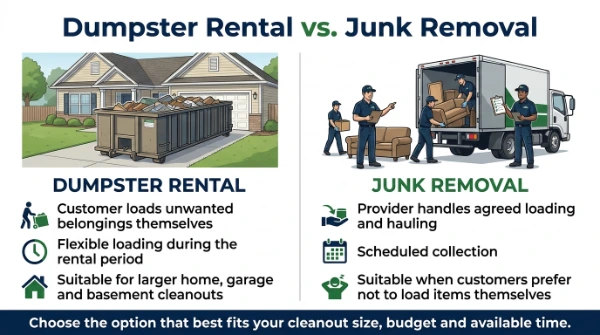
The right choice depends on how much material you have, how quickly it needs to be removed and whether you want to load the items yourself.
| Consideration | Dumpster rental | Junk removal |
|---|---|---|
| Loading | You load the container | Hauling provider handles removal |
| Sorting time | Useful when sorting over several days | Usually arranged around a scheduled pickup |
| Large cleanouts | Suitable when there is substantial debris | Can suit selected bulky-item removal jobs |
| Labor | You handle loading | Provider handles the agreed hauling work |
| Pricing | Depends on container, rental terms and disposal factors | Depends on the provider, volume and service |
When Is Renting a Dumpster a Practical Choice?
A dumpster rental may make sense when:
- You’re clearing several rooms.
- A garage or basement contains substantial accumulated debris.
- You’re renovating or remodeling a home.
- You’re preparing a property for sale or new occupants.
- You want to sort and load belongings at your own pace.
- You have more waste than can be managed through ordinary collection.
When Might Junk Removal Be More Suitable?
Full-service junk removal may be more convenient when you have a small number of bulky
o items and do not want to handle the loading yourself.
It may also suit situations where carrying heavy furniture or appliances is difficult.
Compare the scope of service and total cost before choosing. A dumpster rental is not automatically cheaper; the better option depends on the amount of material, labor involved and project requirements.
What Size Dumpster Do You Need for a Home Cleanout?
The appropriate dumpster depends on the volume and type of material your cleanout produces. A single-room decluttering project may generate far less debris than clearing a full garage, basement or entire house.
Before selecting a container, consider:
- How many rooms are being cleared?
- Are you removing furniture or mostly smaller household items?
- Will the project include renovation or construction debris?
- How much space is available for delivery?
- How long will you need to load the container?
- Are there weight restrictions or material-specific requirements?
Avoid estimating dumpster size based only on the number of rooms. Furniture, bulky items and dense materials can take up space or add weight quickly.
For help choosing an appropriate container, contact River to Ridge Dumpster Rentals at (828) 599-9900 and explain the size and type of your cleanout project.
What to Do With Items That Cannot Go in a Dumpster
Not every unwanted household item belongs in a roll-off dumpster. Some materials require recycling, special collection or approved disposal facilities.
Before loading, identify potentially restricted materials such as:
- Batteries.
- Paints and liquid chemicals.
- Oils, fuels and solvents.
- Tires.
- Electronics.
- Certain appliances.
- Hazardous household materials.
- Other materials prohibited under your rental terms.
Keep these items separate until you have confirmed the correct disposal method.
The City of Asheville provides local recycling and waste guidance through its AVL Collects resource, including a Waste Wizard to help residents identify how to manage particular items.
For dumpster-specific restrictions, see our accepted dumpster materials guide.
Your Asheville Home Cleanout Planning Checklist
Before starting a large decluttering project, use this checklist to organize the work.
- Choose the rooms or areas you want to clear.
- Set a realistic timeline.
- Gather boxes, bags and sorting supplies.
- Separate items to keep, donate, sell and dispose of.
- Check local donation acceptance requirements.
- Arrange collection for eligible bulky household items.
- Identify restricted or hazardous materials.
- Estimate the volume of remaining debris.
- Decide whether a dumpster rental would be practical.
- Confirm delivery access and placement requirements.
- Check material acceptance and rental terms before loading.
Planning these steps in advance helps keep the project organized and reduces the chance of making unnecessary disposal trips.
Frequently Asked Questions About Decluttering in Asheville, NC
How do I start decluttering a house?
Start with one manageable area rather than attempting to clear the entire house at once. Sort belongings into keep, donate, sell and dispose categories, then arrange removal before moving to the next area.
What is the fastest way to clean out a house?
Create a room-by-room plan, separate important belongings first, assign clear sorting categories and arrange donation and disposal options in advance. For large cleanouts, having an appropriate waste-removal plan can reduce repeated trips.
How do I declutter my house in one day?
Concentrate on one or two priority areas, prepare sorting supplies beforehand and focus on items that are clearly unwanted. A full-house cleanout may require more than one day, especially when furniture, donations and estate belongings are involved.
Where can I donate large furniture in Asheville?
Asheville Habitat for Humanity ReStore is one local option for selected furniture in good condition. It offers donation pickup in Buncombe County and parts of Madison County. Confirm current acceptance requirements and pickup availability before arranging a donation.
Does Asheville trash pickup take bulky items?
The City of Asheville offers scheduled collection for eligible bulky items, including chairs, beds, mattresses and sofas. Call (828) 251-1122 or use The Asheville App to arrange collection and confirm the current requirements.
Is it cheaper to rent a dumpster or hire junk removal?
It depends on the amount of material, labor requirements, rental duration and disposal costs. Dumpster rental may be practical for larger projects when you are willing to load the container yourself. Full-service junk removal may suit smaller jobs where you prefer someone else to handle the hauling.
What size dumpster do I need for a home cleanout?
The right size depends on the volume of belongings, furniture and other debris being removed. Describe the number of rooms, bulky items and material types to a rental provider before selecting a container.
How do you clear out a house full of junk?
Begin by separating important belongings and valuables. Divide the remaining items into donation, resale and disposal categories, then plan the removal of bulky goods and larger volumes of debris.
What should I do with items that cannot go in a dumpster?
Keep restricted materials separate and check approved local disposal or recycling programs. Never assume that batteries, chemicals, paint, tires or electronics are accepted in a rental dumpster.
How long does a garage cleanout usually take?
The time depends on the size of the garage, the amount of accumulated material and how much sorting is required. A small project may take a day, while a heavily cluttered garage may need several sessions.
Need a Dumpster for Your Asheville Cleanout?
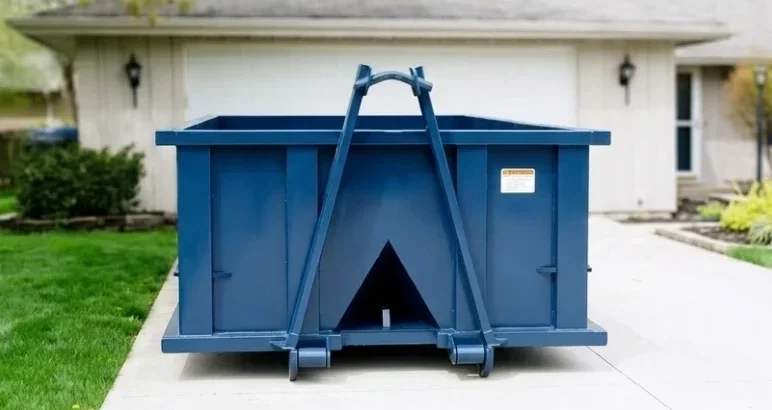
Clearing a garage, basement, multiple rooms or an entire property can produce more debris than regular household collection can handle. When you want to sort and load unwanted items yourself, a roll-off dumpster can provide a practical way to manage larger cleanout projects.
River to Ridge Dumpster Rentals serves customers looking for dumpster rental options in Asheville and surrounding areas.
Call (828) 599-9900 to discuss your home cleanout, the type and volume of debris, your delivery location and the container options available for your project.
Before scheduling, confirm accepted materials, weight limits, rental terms and placement requirements.
Planning a larger cleanout? Call River to Ridge Dumpster Rentals at (828) 599-9900 to discuss your project.
Need a Dumpster for Your Asheville Home Cleanout?
Clearing out a garage, basement, spare room or entire property? River to Ridge Dumpster Rentals can help you manage larger cleanout projects with a roll-off dumpster you load at your own pace.
Call (828) 599-9900 to discuss your project, available container options and delivery arrangements.
Before scheduling, confirm accepted materials, weight limits, rental terms and placement requirements.
Find us
5 Frederick St,
Asheville, NC 28801
Monday – Friday, 7:00 am – 5:00 pm Booking: 24/7
+1 828 599 9900
Navigate
Areas We Serve
North Carolina